//

Navigating life as an adult who constantly hides their neurodivergent traits is exhausting. If you recently took a self-assessment, you might be confused by your high masking autism RAADS-R score. This guide will explain exactly what your results mean. First, we will explore how camouflaging affects your daily energy. Next, we will break down specific score thresholds and what they suggest. Finally, we will provide actionable checklists to clarify your experiences. If you want to understand your baseline better, you can try our RAADS-R online test to see how your traits map out. Let's decode your results together.
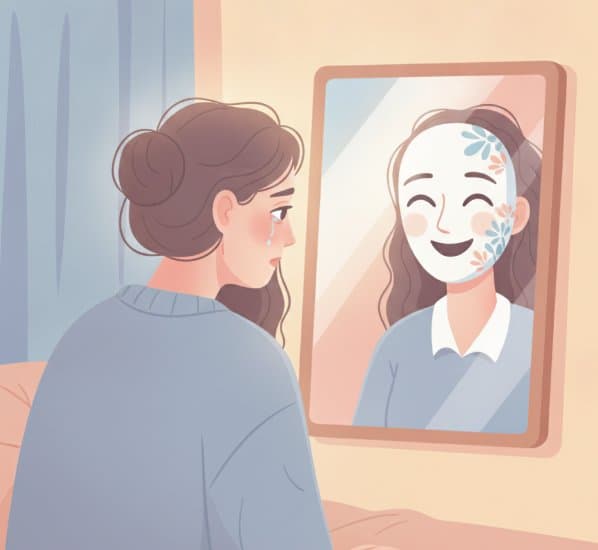
Understanding your assessment starts with defining the core behaviors involved. Many adults spend decades camouflaging their true reactions. Therefore, standard quizzes often miss these hidden patterns.
High masking refers to a survival strategy. You consciously or subconsciously hide your natural autistic traits to blend into society. For example, you might force yourself to make eye contact. Also, you might suppress the urge to fidget during meetings. Masking takes a massive amount of mental energy. As a result, you often experience severe burnout after social interactions. This exhaustion is a primary reason many adults begin researching their behaviors later in life.
Standard questionnaires often fail high maskers. However, the RAADS-R assessment specifically addresses this problem. It asks you to compare your childhood experiences with your current adult behaviors. Because of this, it can pierce through your adult camouflage. You might answer that a trait was true only before age 16. This tells the assessment that you learned to mask that specific behavior over time. Consequently, understanding your masking traits on RAADS-R tests gives you a much clearer picture of your internal world.
To help you reflect, review this actionable checklist. Ask yourself if you frequently engage in these five common masking behaviors:
If you recognize these habits, your masking tendencies are likely very high. Next, let us look at how these habits translate into actual numbers.

When you receive your results, the total number can feel abstract. However, RAADS-R scoring follows a very specific logic. Knowing this logic helps you interpret your unique behavioral profile accurately.
The assessment does not just give you a single number. Instead, it breaks your experiences down into four core symptom domains.
Therefore, you might score low in language but very high in sensory processing. This specific breakdown explains why every individual presents differently.
Many adults land in what experts call the "gray zone." A total score between 65 and 105 suggests mild neurodivergent traits. If you fall here, you might share some characteristics with the autistic community. However, these traits might not completely disrupt your daily functioning. In contrast, this range also captures people with very strong masking skills. You might have minimized your struggles when answering the questions.
Let us look at specific numbers to clarify the RAADS-R results meaning.
First, consider a RAADS-R score 99. This sits firmly in the upper gray zone. It suggests you have noticeable neurodivergent characteristics. Yet, these might overlap with other conditions like ADHD or social anxiety.
Next, consider a RAADS-R score 130. A score of 130 or higher generally aligns with pronounced autistic traits. If you score this high, your internal experiences strongly match the established criteria for autism. However, remember that no single number provides a medical diagnosis.
Sometimes, your results do not match your internal feelings. You might feel deeply exhausted by masking, yet receive a low score for autism traits. This paradox is common, and we can explain it through a few key factors.
Yes, you can absolutely score high on an autism test and not be autistic. We call this a false positive. Several other life experiences can trigger similar behavioral responses. For instance, growing up in a highly critical environment can make you hyper-vigilant. You might script conversations to avoid conflict, not because of autism. Therefore, we must view these scores cautiously.
A low score often happens because you answer questions based on your masked external behaviors. You might answer "no" to having meltdowns because you suppress them publicly. However, internally, your nervous system is screaming. If you take the assessment while heavily masking, you will likely score lower than your true internal experience warrants. If you want to dive deeper into how masking alters your answers, explore the comprehensive RAADS-R test guide to refine your understanding.
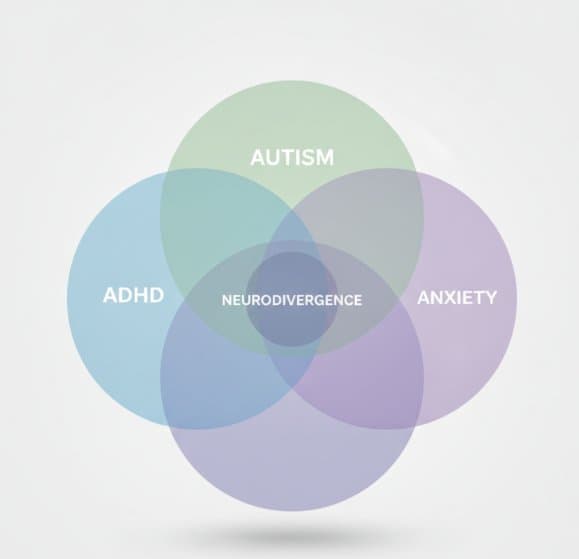
Overlapping conditions complicate your score significantly. ADHD, Complex PTSD, and severe social anxiety share many symptoms with autism.
Because these conditions mimic autism, a high score might simply highlight your general psychological distress. This is why professional context is always necessary.
Now that you understand the scoring mechanisms, you might wonder what to do next. The best approach involves structured, safe self-reflection. We encourage you to use our educational tools to map your unique traits.
Self-reflection empowers you. It shifts your focus from "What is wrong with me?" to "How does my brain work?" By understanding your specific sensory and social patterns, you can create a friendlier daily routine. Furthermore, organizing your thoughts helps you prepare for future medical consultations.
We designed an educational tool to assist your self-discovery journey. Our tool uses AI to analyze your responses across the four core domains. It translates confusing medical jargon into clear, everyday language. Furthermore, it highlights where your masking behaviors likely impact your daily energy levels. We built this strictly for educational exploration, not for clinical diagnosis.
To maximize your self-reflection, follow this step-by-step approach when using our tool:
This structured approach turns abstract numbers into actionable lifestyle improvements.
Receiving a high masking autism RAADS-R score can feel overwhelming, validating, or confusing. To protect your well-being, take these practical next steps.
First, give yourself permission to rest. Realizing how much energy you spend camouflaging is emotionally taxing. Second, focus on self-accommodation. If bright lights bother you, dim them. You do not need a doctor's permission to make your environment comfortable. Third, find a neurodivergent community. Connecting with others who share your experiences reduces feelings of isolation.
Finally, if your traits cause significant distress, seek professional support. Bring your reflection notes to a qualified specialist. If you feel ready to organize your thoughts today, check your traits with this free RAADS-R tool to generate your personalized educational baseline.
Medical Disclaimer: The information in this article and our online tools serve educational purposes only. They do not replace professional medical advice. Always consult a licensed psychiatrist or psychologist for a formal clinical evaluation.
Does a high RAADS-R score guarantee a clinical autism diagnosis? No, it does not. A high score only suggests that you share behavioral traits commonly associated with autism. It serves as a preliminary reference. Only a licensed medical professional can provide a clinical diagnosis after a comprehensive evaluation.
What other mental health conditions can cause an elevated RAADS-R score? Several conditions share overlapping traits. People with Attention Deficit Hyperactivity Disorder (ADHD), Post-Traumatic Stress Disorder (PTSD), and severe social anxiety often score high. These conditions cause sensory sensitivities and social difficulties that the test picks up.
Can masking behaviors change depending on the social environment? Yes, absolutely. Masking is highly context-dependent. You might mask heavily at work to appear professional, but drop the mask entirely when alone or with trusted friends. This environmental shift causes severe energy fluctuations.
What kind of medical professional is qualified to provide a formal autism evaluation? You should seek out a licensed neuropsychologist, a clinical psychologist, or a psychiatrist who specializes in adult neurodivergence. General practitioners usually cannot provide this specific diagnosis, but they can refer you to the right specialist.