//

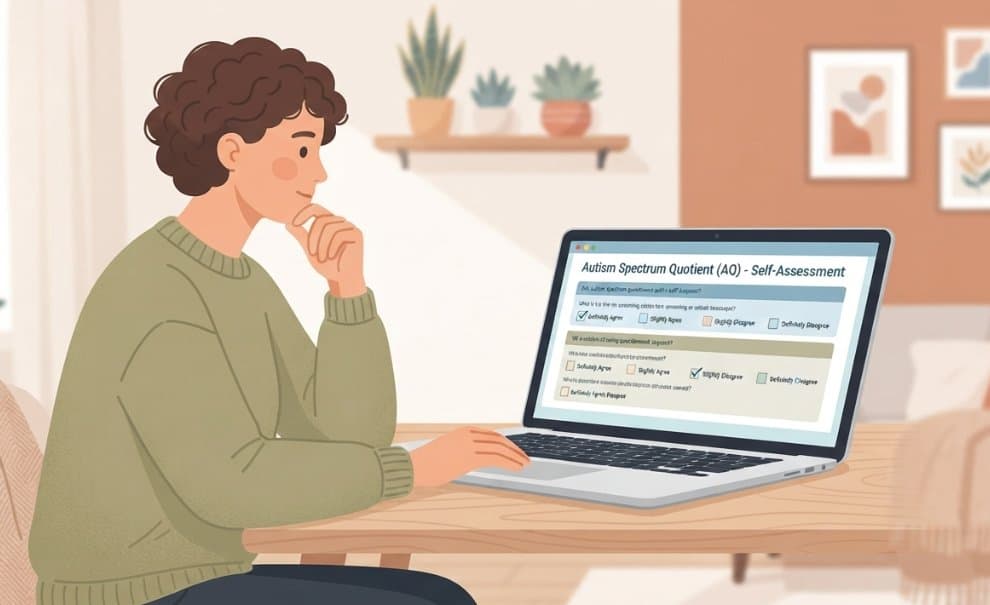
Many adults who feel different throughout their lives eventually wonder if they are on the autism spectrum. If you are seeking clear answers, you have likely encountered online screeners and asked yourself whether the RAADS-R test is scientifically validated as a reliable tool. Understanding whether a self-assessment is scientifically credible is a vital first step in your journey of self-discovery. This comprehensive RAADS-R test guide will help you evaluate the clinical reality of this screening tool by exploring its origins, accuracy, and limitations. For example, we will provide a detailed symptom overlap matrix, a checklist for common answering mistakes, and a practical path forward.
Historically, clinical autism assessments focused heavily on children. This focus left many adults without a clear path to understanding their unique neurological traits. However, in 2011, Dr. Riva Ariella Ritvo and her research team designed the Ritvo Autism Asperger Diagnostic Scale-Revised. They specifically intended to address the gap in adult screening tools. Because adult autism presents differently due to years of social masking, they needed a nuanced approach. The resulting instrument focuses on four key behavioral domains to capture a complete picture of adult experiences.
To establish the test's performance, the original 2011 validation study by Ritvo and colleagues examined a sample of 779 adults. When administered in clinical settings with clinician assistance, the results within that original validation sample were highly encouraging. The study reported a sensitivity rate of 97%, meaning it successfully identified almost all autistic participants in the development sample, and a specificity rate of 100%, indicating no false positives in the control group. These figures describe performance in the original 779-participant validation sample and should not be assumed to generalize universally to every setting or population. Clinicians recognized the scale as a useful adjunct to support, rather than replace, formal evaluation. These peer-reviewed findings offer clinical support for the scientific validity of the RAADS-R test when it is used as an adjunctive tool alongside professional judgment.
When you take an online screener alone, the environment is very different from a clinic. How you interpret questions and the context in which you answer can influence your responses, and over-analysis or misinterpretation of specific behavioral prompts is possible. The available evidence, however, does not establish that online administration by itself causes a specific drop in specificity, nor does it identify the absence of professional mediation as the causal factor behind any performance differences. Psychometric figures from the original clinical validation sample should not be assumed to transfer directly to unsupervised online use, because population, co-occurring conditions, interpretation, and setting all matter when interpreting results.
Recent independent research has examined how the test performs outside its original validation context. A study by Jones et al. (2021) retrospectively examined 50 adults who had already been referred to a specialist autism service. Participants completed the RAADS-R as a self-report questionnaire before their full clinical assessment. In that sample, 49 of the 50 participants scored above the 65-point threshold, yet only 17 ultimately received an autism diagnosis, and the RAADS-R scores did not predict which referred adults went on to receive a diagnosis. The authors concluded that, in this setting, the RAADS-R was not suitable as a standalone pre-assessment screener. It is important to note that this was not an online-versus-clinic experiment; it was a retrospective review, and the study did not establish that the absence of professional mediation caused false positives. Rather, the findings describe limited predictive validity in a real-world specialist referral context. Understanding whether the question is the RAADS-R test accurate can be answered with a simple "yes" requires acknowledging these real-world limitations.
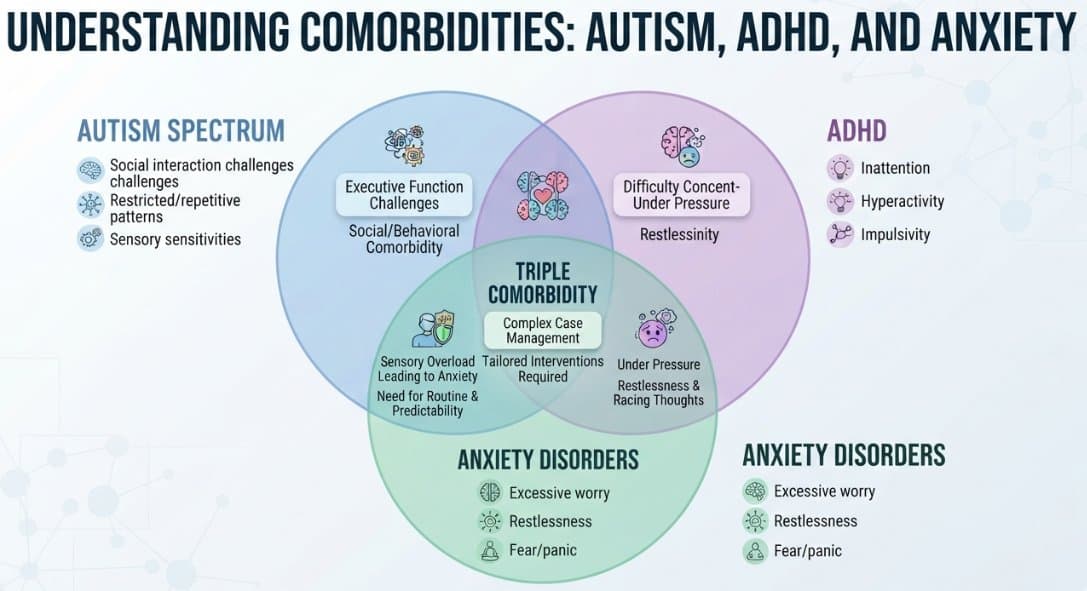
Many mental health and neurodivergent conditions share similar behavioral characteristics. As a result, you might score highly on the test even if you are not autistic. For example, conditions like ADHD, social anxiety, and OCD often trigger high scores due to overlapping questions.
To help you visualize these differences, we have structured a trait overlap matrix. This tool outlines how different conditions can respond similarly to the same screening prompts.
| Behavioral Category | Autism Spectrum (ASD) | ADHD | Social Anxiety Disorder (SAD) | OCD |
|---|---|---|---|---|
| Social Challenges | Difficulty reading unspoken social cues and non-verbal communication. | Difficulty focusing during conversations or interrupting others. | Intense fear of social judgment despite understanding cues. | Social avoidance due to anxiety over specific obsessions. |
| Sensory Sensitivity | Neurological sensory overload from specific sounds or lights. | Sensory distractibility and restlessness in loud spaces. | Physical panic symptoms triggered by social environments. | Discomfort from physical environments that trigger compulsions. |
| Repetitive Behaviors | Self-soothing stimming or repetitive behaviors used for comfort. | Fidgeting and impulsive movements due to hyperactivity. | Repetitive pacing or habits triggered by acute anxiety. | Compulsive rituals performed to reduce obsessive thoughts. |
When you review your answers, consider if other factors are at play. For instance, if you have severe social anxiety, you might answer "yes" to avoiding social gatherings. Meanwhile, your underlying motivation is fear of rejection, not a natural difficulty with social cues. In contrast, an autistic individual might avoid the gathering due to sensory overload. Consequently, these shared behaviors can artificially inflate scores when considering the relationship between the RAADS-R test and autism.
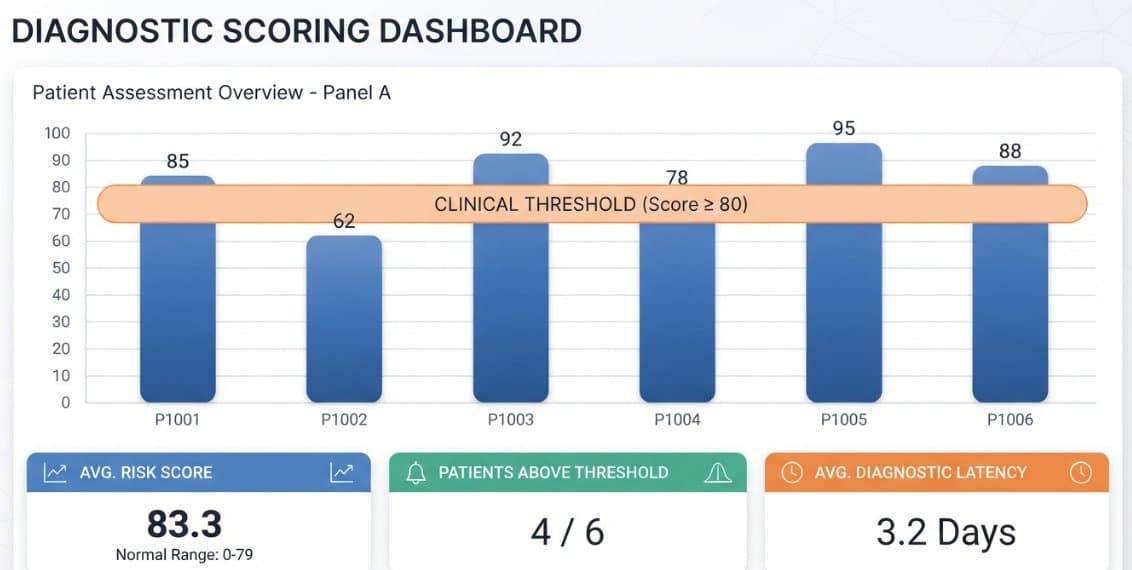
Understanding the RAADS-R test score chart is essential for making sense of your screening experience. The 65-point threshold comes from the original 2011 validation study and reflects performance in that development sample rather than a universal rule. Subsequent studies have reported different performance characteristics and, in some cases, different optimal cutoffs depending on the population and setting. As a result, neither a score below 65 nor a score above 65 can by itself rule autism in or out. A score above 65 indicates that your reported behaviors align with the autism spectrum and may warrant further professional evaluation, while a score below 65 does not exclude autistic traits. No single questionnaire is flawless for every individual.
In short, yes, it is entirely possible to score above 65 without being autistic. Because the questionnaire is sensitive to overlapping behavioral traits, conditions such as ADHD, social anxiety, and OCD can contribute to elevated scores. In the Jones 2021 specialist-referral sample, for example, 49 of 50 referred adults scored above 65 even though only 17 ultimately received an autism diagnosis. Therefore, you should view a score above 65 as an invitation for deeper self-reflection and professional follow-up, not as a diagnostic label.
To thoroughly understand the meaning of RAADS-R test results, you must look beyond the total number. The assessment breaks down into four distinct subscales:
By analyzing these subscales, you can identify exactly which areas of your life align most with the spectrum.

Many adults on the spectrum struggle with the wording of the 80 questions. Because the prompts are often written in a rigid or absolute format, they can trigger a "literal bias."
If you take the questions too literally, you might select an inaccurate answer. For example, consider the question: "I am a sympathetic person." You might answer "never" because you do not always know how to show sympathy outwardly. However, you might feel deep empathy internally. To help you navigate these questions, use our practical pre-test guide below:
The Self-Reflection Answering Checklist:
Many adults have spent decades practicing "masking" to fit into neurotypical environments. For instance, you might make eye contact regularly because you trained yourself to do so. However, if eye contact still feels uncomfortable or unnatural, you should answer the question based on that internal discomfort. Your internal experience is the key to accurate self-reflection. When you are interpreting your RAADS-R test results, accounting for your masking habits will give you a much clearer baseline.
Now that you understand the science, you might feel ready to explore your own mind. Taking a structured, quiet moment for self-reflection can bring immense mental clarity. Because processing your memories in a structured way is easier than navigating random thoughts, a guided assessment helps organize your experiences.
We invite you to begin your self-discovery journey with our online assessment. We have designed this questionnaire to serve as a gentle, educational resource for your personal reflection. It takes about 15 minutes to complete as an estimate. Before you enter any information, please review our site's current privacy policy and data-handling terms so you understand how your responses are stored and used.
Once you complete the 80 prompts, our platform instantly generates a detailed report of your behavioral patterns. Instead of giving you a simple score, the report breaks down your traits across the four clinical subscales. This report provides a beautiful roadmap of your strengths, unique sensitivities, and behavioral tendencies. If you are ready to begin, you can visit our homepage and try the online test to start your safe path of self-understanding.
We must emphasize that an online screener cannot replace a professional evaluation. A formal diagnosis is conducted by a qualified clinician and typically includes clinical interviews, developmental history, and professional judgment. No matter how scientifically validated an assessment is, it remains a preliminary indicator. Therefore, you should never use a high score to self-diagnose or make major medical decisions.
If your score is high and you feel a strong sense of resonance, your next step is straightforward. You can print out your detailed report and bring it to your healthcare provider or a licensed therapist. Because the report lists specific subscales, it serves as an excellent discussion guide. It helps you articulate behaviors and memories that might otherwise be difficult to explain during your first appointment.
In conclusion, the evidence on the RAADS-R is mixed. The original 2011 validation study supports its use as a clinician-assisted adjunct to a comprehensive evaluation, while later real-world studies in specialist referral settings have shown limited predictive validity when the questionnaire is used as a standalone pre-assessment screener. It offers adults a structured, compassionate mirror to examine their lifelong behavioral patterns, but it is not a diagnostic instrument. A formal diagnosis still requires a qualified clinician. If you are ready to take your first gentle step toward clarity, we invite you to explore our RAADS-R test resources and begin your journey of self-discovery today.
The evidence on the RAADS-R is mixed. The original 2011 validation study supports its use as a clinician-assisted adjunct to a comprehensive evaluation, but later real-world studies in specialist referral settings have shown limited predictive validity when the questionnaire is used as a standalone pre-assessment screener. Professionals generally treat it as one component of a broader assessment rather than a definitive diagnostic tool.
Yes, it is possible for an autistic person to score below the 65-point threshold. For example, individuals who have masked their traits exceptionally well for decades may naturally under-report their experiences. No single questionnaire is flawless for every individual.
Yes, overlapping traits between autism and ADHD can contribute to elevated RAADS-R scores. Because both conditions involve sensory processing differences, executive functioning challenges, and social focus difficulties, their behavioral presentations can overlap on the questionnaire. An elevated score therefore does not by itself distinguish autism from ADHD, and a qualified clinician should perform a differential assessment to interpret the result in context.
Please check the test page for current information on availability and any associated fees. Because privacy and data-handling practices can change over time, we recommend reviewing our current privacy policy and data-handling terms on the site before entering any personal information; we do not guarantee cost, privacy, security, storage, or sharing practices. You can find the latest details on our main portal at autism-raadsr.com.
To prepare, find a quiet space where you will not be interrupted for 15 to 20 minutes. Keep an open mind, and focus on your natural childhood experiences before age 16. Most importantly, answer based on your true inner feelings rather than your masked social habits.