//

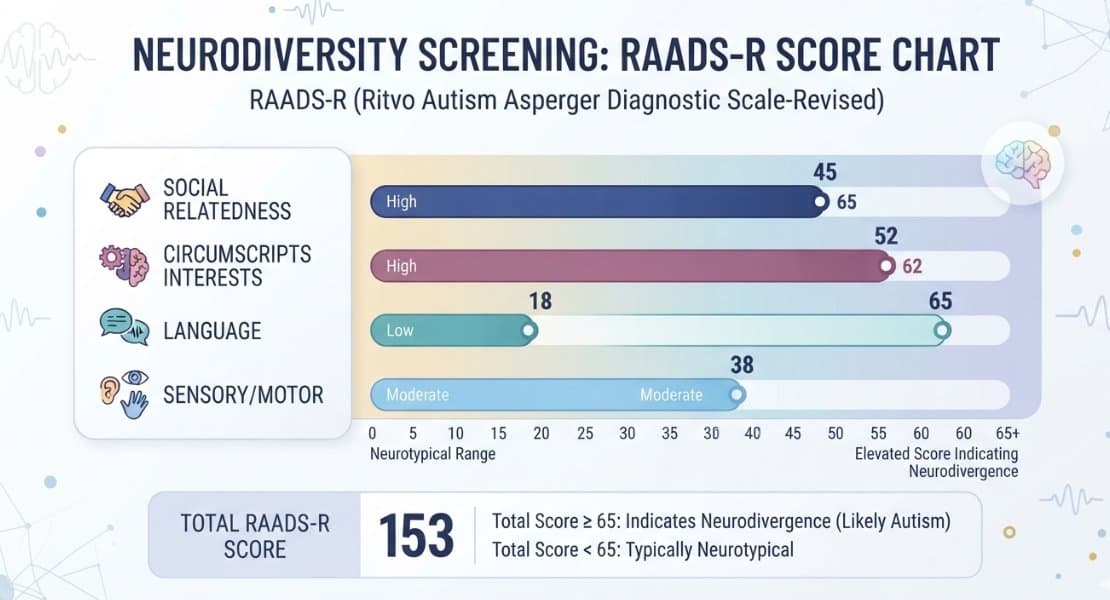
Have you ever looked at a psychological questionnaire and felt completely confused by the wording? Having the raads-r test questions explained can bring immense clarity if you are an adult exploring potential autistic traits. Many late-identified individuals struggle with ambiguously worded items on standard screening questionnaires. Therefore, this comprehensive guide decodes the 80 test statements so you can navigate them without overwhelm. You will discover how the four core subscales function, how to interpret your scores around the 65-point cutoff, and how ADHD traits might overlap with your results. By following our practical breakdown and checklists, you can easily explore our RAADS-R test online to gain meaningful insights into your unique neurodivergent profile.

When you first open the Ritvo Autism Asperger Diagnostic Scale-Revised, the total question count can feel overwhelming. Having the raads-r test questions explained starts with understanding their primary design. The questionnaire contains 80 statements specifically crafted to identify adult autistic traits. Unlike childhood assessments, this self-report inventory evaluates how your behaviors have evolved over time.
The questionnaire focuses heavily on lifelong consistency. Autistic traits are developmental, which means they appear early in life and persist into adulthood. For example, a statement might ask about your social comfort or sensory reactions. Because masking can hide adult traits, the test compares your past and present experiences.
Why does the inventory ask about your feelings before age 16? Many autistic adults learn complex coping mechanisms over time. As a result, adult behavior often masks underlying neurodivergent preferences. By evaluating childhood habits alongside current tendencies, the questions help uncover your authentic neurotype rather than just your learned social strategies.
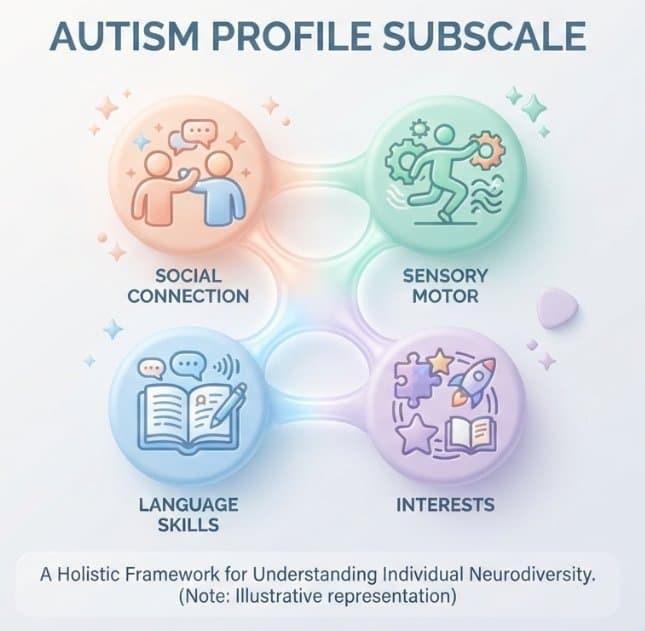
The 80 test statements are not randomly distributed. Instead, they are divided into four distinct categories called subscales. Understanding these categories allows you to see which specific areas of your life align most strongly with autistic trait patterns.
The social relatedness subscale is the largest section of the test, containing 39 items. Consequently, your raads-r social relatedness score forms the backbone of your overall result. Questions in this group examine how you build friendships, navigate group dynamics, and process emotional empathy.
Autistic masking often complicates social relatedness answers. For instance, you might know how to force eye contact today, even if it feels uncomfortable. If you currently force social habits out of obligation, select options that reflect your natural internal preference rather than your forced compliance.
This category features 14 statements focusing on deep passions, repetitive habits, and need for predictability. Autistic adults often experience intense, focused interests that bring joy and focus. Questions evaluate whether you feel distressed when daily routines change unexpectedly.
Containing 14 items, this subscale measures how your nervous system responds to sensory input. Statements assess physical stimming habits, sound sensitivities, and tactile discomforts. For example, questions may ask if clothing tags or bright lights cause intense physical distress.
The final 7 statements focus on communication mechanics and verbal expression. Questions evaluate whether you take figures of speech literally or struggle with conversational turn-taking. While many autistic adults develop strong vocabularies, subtle pragmatic language differences often remain.
A major frustration for test-takers is the literal phrasing of the statements. Because autistic minds often process language literally, broad statements like "I always prefer to be alone" can trigger intense overthinking. However, understanding the intent behind the wording helps you choose answers accurately.
To help you navigate tricky wording, use this simple interpretation guide when answering:
Standard questionnaires are often written from a neurotypical observational perspective. In contrast, neurodivergent individuals process questions through detailed, context-dependent frameworks. If a question asks whether you like meeting new people, you might think, "It depends on the setting, topic, and my energy level!" When this happens, choose the answer that fits your unmasked default state.
Each question provides four distinct response options:
If a trait was strong during childhood but you managed to suppress it as an adult, option 3 remains the most accurate choice.
Once you complete the 80 statements, interpreting your total score is the next step. A clear raads-r score interpretation helps you understand where your traits fall along the neurodivergent spectrum.
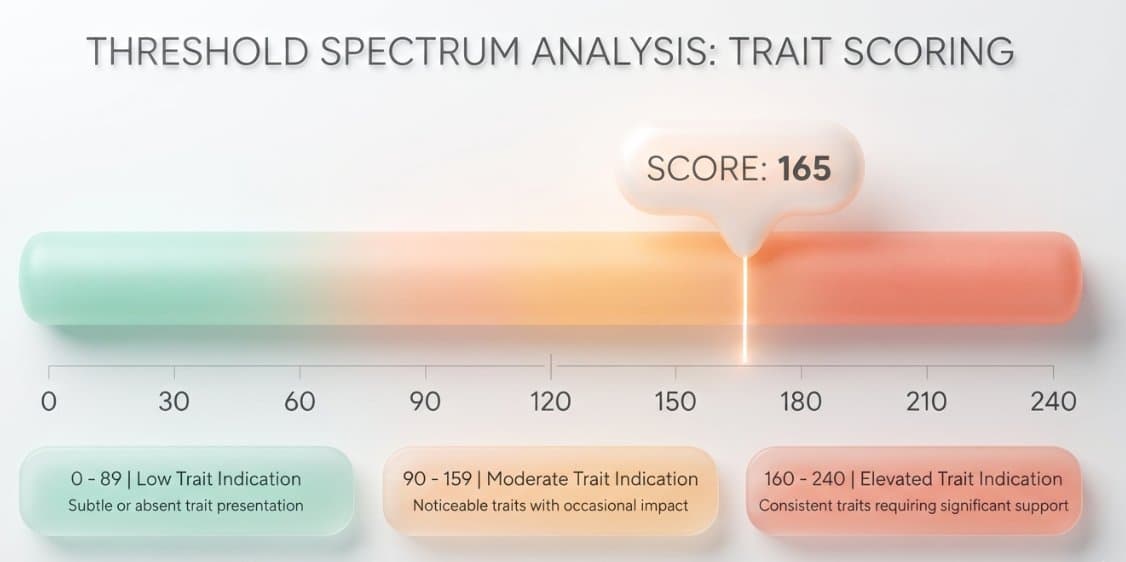
The maximum possible score on the assessment is 240 points. Research indicates that a total score of 65 or higher represents the critical cutoff threshold. Meanwhile, non-autistic individuals typically score well below 65. If your score exceeds 65, it strongly suggests a significant presence of autistic trait patterns.
To better analyze your score, consult a standard raads-r test score chart framework:
Many adults wondering about autism also experience Attention Deficit Hyperactivity Disorder (ADHD). Consequently, searching for raads-r test adhd overlap is extremely common. Both conditions share several behavioral features, which can lead to elevated test scores.
Sensory overload, hyperfocus, and social fatigue occur in both ADHD and autism. For instance, an individual with ADHD might struggle with conversational turn-taking due to impulsivity rather than social processing differences. Similarly, sensory sensitivities can trigger emotional dysregulation in both profiles.
| Trait Category | Autistic Response Pattern | ADHD Response Pattern |
|---|---|---|
| Routine & Change | Distressed by unexpected changes; prefers rigid predictability. | Seeks novelty; struggles with routine due to boredom. |
| Sensory Sensitivity | Rooted in neurological processing of lights, sounds, or textures. | Linked to emotional regulation and executive overload. |
| Special Interests | Deep, persistent focus on specific topics lasting years. | Intense, rapid hyperfixations that shift frequently. |
| Social Interaction | Struggles with unwritten social rules and intuitive cues. | Struggles with social impulse control and active listening. |
If you are dual-neurodivergent (AuDHD), your total score may easily exceed the 65-point threshold. When reviewing your responses, examine whether your routines feel grounding (autistic) or stifling (ADHD). Understanding these subtle nuances helps clarify your dual-trait presentation.
Gaining clarity on questionnaire mechanics is empowering, but reviewing your personal responses brings true self-discovery. Transitioning from abstract knowledge to structured self-reflection allows you to honor your lived experience.
Reading about subscales is helpful, yet seeing your own trait distribution provides concrete answers. Structured self-reflection allows you to identify specific life areas where you might need extra support or self-compassion.
Instead of calculating manual scores, you can use our digital inventory. When you check your traits with this RAADS-R test, our instant system analyzes your answers across all 4 subscales. The automated report generates a clear visual breakdown, eliminating scoring errors and math fatigue.
Your personalized output provides a comprehensive summary of your total score alongside individual subscale results. You will receive an easy-to-read chart highlighting your social relatedness, sensory, language, and interest scores. This detailed profile serves as a valuable personal record for your ongoing self-discovery journey.
While self-assessment offers deep personal validation, understanding its boundary limits is essential for your wellbeing.
Online assessments are educational instruments designed for self-reflection. They are not clinical diagnostic evaluations. A formal medical diagnosis requires comprehensive assessment by a licensed psychologist or psychiatrist. However, high screening scores provide a legitimate foundation for pursuing formal support if you choose to do so.
If you decide to seek a formal clinical evaluation, bring your subscale report with you. Healthcare professionals appreciate structured data. Your completed questionnaire breakdown helps illustrate specific lifelong patterns, making your initial clinical consultation far more productive.
In summary, having the raads-r test questions explained helps demystify the adult autism screening process. By breaking down the 80 questions into four subscales, understanding literal phrasing, and analyzing score cutoffs, you gain valuable clarity about your mind. Whether you suspect autism, ADHD, or AuDHD, honoring your unique trait pattern is a powerful act of self-acceptance. As you take your next steps, feel free to review your results with a RAADS-R test guide to support your ongoing journey of self-discovery.
How are the 80 questions on the RAADS-R test calculated?
Each statement offers four choices scored from 0 to 3 points. Total scores range from 0 to 240 points, reflecting trait intensity over your lifespan.
What score ranges indicate strong autistic traits on the RAADS-R?
Scores of 65 or higher suggest significant autistic traits. Meanwhile, scores between 100 and 150 indicate a strong alignment with typical autistic profiles.
Why are RAADS-R questions sometimes hard to interpret for autistic adults?
Autistic adults often process phrasing literally. Consequently, absolute words like "always" or "never" can trigger overthinking during self-assessment.
Can you score high on the RAADS-R test if you have ADHD instead of autism?
Yes, overlapping traits like sensory overload and social fatigue in ADHD can elevate scores above the 65-point threshold.
Can non-autistic conditions like social anxiety or trauma cause a high RAADS-R score?
Yes, conditions involving social hesitation, hypervigilance, or sensory discomfort can influence subscale responses and raise total scores.
Why is an online RAADS-R screening different from a clinical medical diagnosis?
Online screeners are educational self-reflection tools. In contrast, formal medical diagnosis requires comprehensive evaluation by a licensed healthcare professional.
What should I do after receiving my RAADS-R score breakdown?
Save your subscale report for personal reflection, research neurodivergent coping strategies, or share the results with a qualified professional.