//

Navigating the science of adult autism screening tools can feel overwhelming. If you are exploring your own neurodivergence, you might wonder whether popular questionnaires actually stand up to academic scrutiny. By exploring our comprehensive RAADS-R guide right here on autism-raadsr.com, this guide examines peer-reviewed literature, accuracy metrics, and how to safely use self-assessment tools.
When you research adult neurodivergence, finding reliable tools matters. The Ritvo Autism Asperger Diagnostic Scale-Revised (RAADS-R) is one of the most widely recognized self-assessment questionnaires for adults. However, many people ask: is the RAADS-R test peer-reviewed and scientifically validated?
The short answer is yes. Developed by Dr. Riva Ariella Ritvo and her research team, the scale was published in peer-reviewed academic journals to establish its scientific credibility. Peer review means that independent experts in psychology and autism research scrutinized the methodology, sample sizes, and statistical analysis before publication.
In a landmark 2011 study published in the Journal of Autism and Developmental Disorders, researchers evaluated the effectiveness of the RAADS-R. The study involved hundreds of adult participants, comparing diagnosed autistic adults with neurotypical control groups.
The researchers found that the questionnaire successfully differentiated autistic adults from non-autistic individuals. Because traditional diagnostic criteria were often built around children, this peer-reviewed study provided a much-needed framework tailored specifically to adult presentation.
Many older screening tools failed to capture adults who developed strong coping mechanisms or learned to mask their traits over decades. The RAADS-R was designed to capture internal experiences that external observers might miss. By focusing on adult-specific challenges, the creators built a foundation that researchers continue to cite in modern neurodiversity studies.
Scientific validation relies heavily on statistical metrics. When evaluating the raads-r test reliability peer reviewed literature, researchers look closely at two core concepts: reliability and validity.
Reliability measures whether a test yields consistent results over time. Validity measures whether the test actually measures what it claims to measure. Understanding these metrics helps you interpret how trustworthy self-screening results can be.
In statistical terms, the RAADS-R demonstrated remarkably high internal consistency and test-retest reliability. When participants retook the assessment after a period of time, their scores remained remarkably stable. This consistency suggests that the questionnaire measures stable behavioral patterns rather than temporary mood fluctuations.
The 2011 validation study reported impressive statistical markers for the RAADS-R:
These numbers highlight why the scale gained traction in research and clinical settings. However, researchers always emphasize that statistical accuracy in controlled studies differs from real-world, unmonitored self-administration.
If you have already completed a questionnaire or plan to explore your traits, understanding how scoring works is essential. The test uses a numerical scale where higher scores reflect greater alignment with autistic experiences.
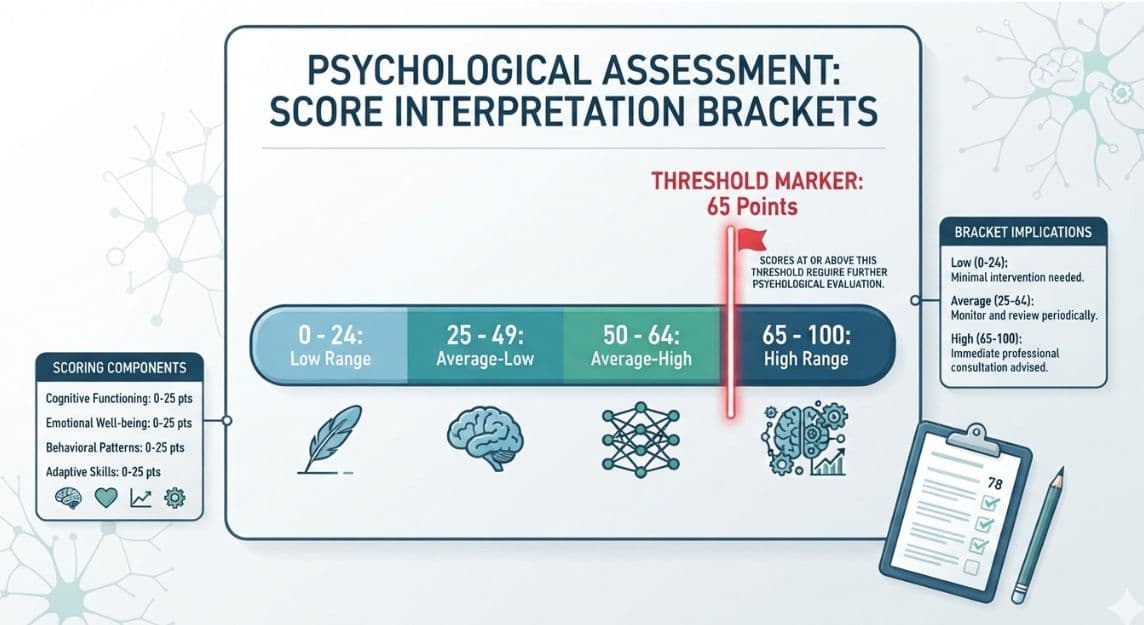
In clinical literature, a score of 65 is traditionally used as the screening threshold. Scoring at or above 65 suggests that an individual shares many traits common in diagnosed autistic adults.
However, reaching this threshold is not a medical confirmation. Instead, it serves as a helpful indicator that warrants deeper self-reflection or a conversation with a qualified professional.
The 80 items on the questionnaire are divided into four distinct subscales. Looking at these domains can help you understand your unique profile:
Online communities like Reddit often feature lively debates regarding whether the raads-r test is accurate. While academic studies report high validity, everyday users sometimes express skepticism. Exploring these differing perspectives helps create a balanced view.
Many online users note that certain questions on the RAADS-R overlap with conditions like ADHD, social anxiety, or complex trauma. Because human psychology is complex, experiencing sensory overload or social fatigue does not automatically point to a single neurodivergent profile. Recognizing this overlap prevents over-identifying with a single label.
Self-reporting tools rely entirely on how you perceive and report your own behaviors. If you are experiencing high stress, burnout, or anxiety, your self-perception might shift, potentially inflating scores. Understanding this human bias is why researchers view self-assessments as preliminary guides rather than final conclusions.
When researching neurodivergence, you will encounter several different screening questionnaires. Knowing how they differ helps you choose the right resource for your self-reflection journey.
While the AQ offers a fast entry point, the RAADS-R provides a more granular look at sensory and developmental experiences.
Camouflaging, or masking, involves hiding autistic traits to blend into neurotypical environments. Many standard tests miss masked individuals. The RAADS-R was specifically built to capture internal coping mechanisms, making it more effective for adults who spent decades learning to blend in. If you want to explore these patterns, you can try the RAADS-R test online to examine your behavioral traits in an interactive format.
Understanding the science behind screening tools is empowering, but taking the next step requires the right mindset. Self-reflection should feel supportive, not stressful.
Before exploring any questionnaire, keep these steps in mind:
If you feel ready to organize your thoughts, you can explore your traits with this AI-assisted RAADS-R test. This platform offers an 80-question reflection questionnaire designed to help you explore your traits in a private, supportive environment.
Note: This assessment is an educational screening tool for self-exploration and does not constitute a medical diagnosis.
It is vital to maintain clear boundaries between online educational resources and formal medical evaluations. Knowing what a screening tool can—and cannot—do protects your mental well-being.
Online questionnaires cannot account for developmental history interviews, observation, or the exclusion of other overlapping conditions. A true clinical assessment requires a trained psychologist or psychiatrist who can view your experiences holistically.
If your reflection journey leads you toward seeking a professional evaluation, your self-assessment results can become a valuable communication bridge. You can bring structured score breakdowns to a healthcare provider to explain specific challenges you face, making your clinical appointment much more productive.

Exploring adult neurodivergence is a deeply personal process. While peer-reviewed studies confirm that tools like the RAADS-R offer strong reliability and validity, they remain helpful compasses rather than final destinations. Whether you are reading research papers or reviewing your own reflections, remember to treat yourself with patience and curiosity. If you want a structured way to continue learning, you can always explore our RAADS-R online test platform for additional insights and self-reflection tools.
Yes, the RAADS-R scale was developed by clinical researchers and validated through peer-reviewed studies published in academic medical journals like the Journal of Autism and Developmental Disorders.
No. While 65 is the traditional clinical screening cutoff indicating significant traits, a high score is not a formal diagnosis. Only a licensed healthcare professional can provide a clinical diagnosis after a thorough evaluation.
Online community discussions often highlight that self-reporting can be influenced by current mood, stress, or overlapping conditions like anxiety and ADHD, which is why clinical context remains essential.
You can print or save your structured score breakdown and domain subscale percentages to clearly communicate your everyday sensory and social experiences during a clinical consultation.
The RAADS-R contains 80 items focusing heavily on sensory differences and developmental history, whereas the AQ contains 50 shorter items providing a broader overview of cognitive preferences.