//

Navigating the Complexities of Adult Social Patterns
Have you ever felt like you missed an invisible rulebook that everyone else seems to follow naturally? Many adults experience a profound sense of exhaustion and isolation when trying to decode everyday social settings. If you are exploring this self-discovery path, you might want to explore our autism-raadsr online tool to start organizing your thoughts. This comprehensive guide explores social relatedness raads-r examples to help you understand your unique social processing patterns and behavioral tendencies. By examining core definitions, daily scenarios, and scoring frameworks, you will gain clearer insights into how your mind processes interpersonal cues.

The Ritvo Autism Asperger Diagnostic Scale-Revised is a well-known self-assessment tool designed specifically for adults. It helps individuals examine traits associated with the autism spectrum that may have gone unnoticed during childhood.
The questionnaire consists of 80 statements that evaluate various behaviors and internal experiences. Researchers designed these items to capture real-life patterns rather than fleeting moods. Respondents rate how often statements apply to them across different life stages, from early childhood to the present day. This broad scope allows the questionnaire to map out long-standing behavioral tendencies rather than temporary changes.
Many adults, especially women and those with lower support needs, develop deep coping mechanisms over decades. They learn to mimic neurotypical behaviors through observation and practice, a process often called masking. Because of this adaptation, standard screening methods can sometimes miss subtle neurodivergent traits. The RAADS-R scale addresses this gap by focusing on internal feelings, sensory experiences, and specific social challenges that standard screening tools might overlook.
At the heart of many adult evaluations lies the concept of social relatedness. This domain measures how a person connects with others, interprets social signals, and handles emotional reciprocity in relationships, perfectly captured through practical social relatedness raads-r examples.
For many neurodivergent adults, human interaction does not happen automatically. While neurotypical individuals often process body language, tone changes, and facial expressions without conscious effort, others may need to analyze these cues manually. This difference in processing style requires significant mental energy, which can make routine social environments uniquely draining over time.
To make these concepts concrete, consider a few common behavioral examples:
| Social Situation | Typical Neurotypical Approach | Common Neurodivergent Processing Pattern |
|---|---|---|
| Casual Greetings | Automatic exchange of pleasantries | Analyzing the correct timing and appropriate response |
| Group Conversations | Seamlessly jumping in and out of talks | Waiting for a clear pause, often missing the window |
| Reading Expressions | Instantly sensing subtle shifts in mood | Relying on explicit verbal updates to gauge feelings |
After spending hours decoding social rules, many individuals experience a heavy sense of exhaustion. This state, often called a social hangover, goes beyond standard introverted tiredness. It stems from the sustained cognitive load of constant adaptation. Recognizing this pattern is a key step in understanding your personal energy limits and emotional boundaries.
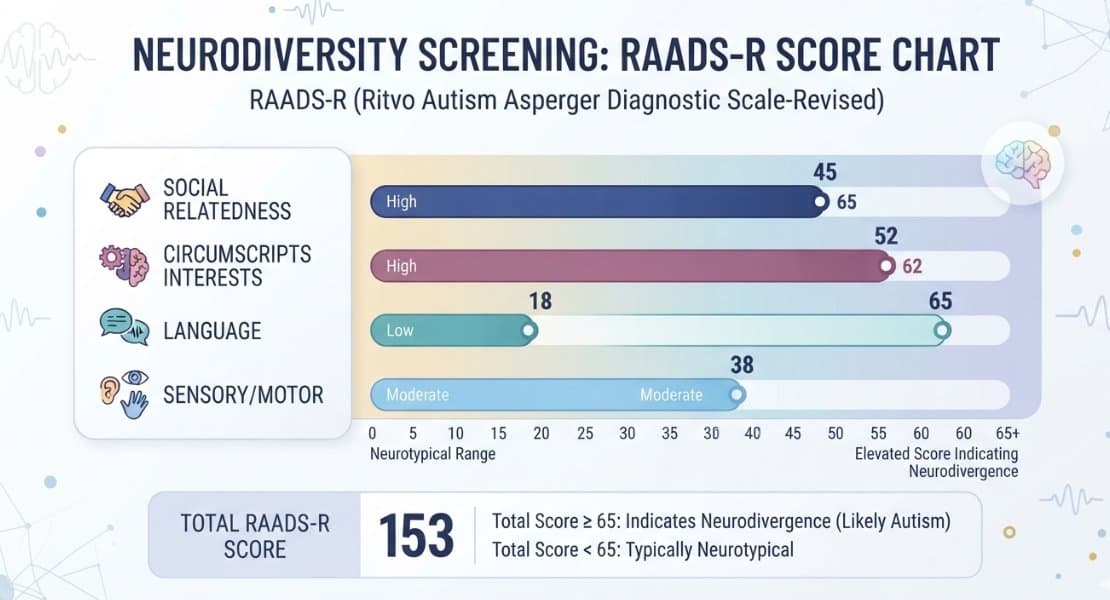
When looking at results, it helps to know how the scoring system functions. The questionnaire covers four primary subscales, with social relatedness being one of the most prominent areas of focus.
The entire test yields a total score ranging from zero to 240 points. Each of the 80 items awards points based on how strongly and consistently a trait is present across different life phases. Higher scores generally indicate a greater accumulation of autism-related traits and behavioral patterns.
Historically, a traditional cutoff score of 65 was used to indicate significant autistic traits. However, modern clinical research suggests that looking at individual subscales provides much more nuanced insight than total scores alone. It is important to remember that these numbers represent trait clusters rather than a definitive medical verdict. You can check your score details using a comprehensive raads-r test guide to see how different ranges are typically categorized in educational literature.
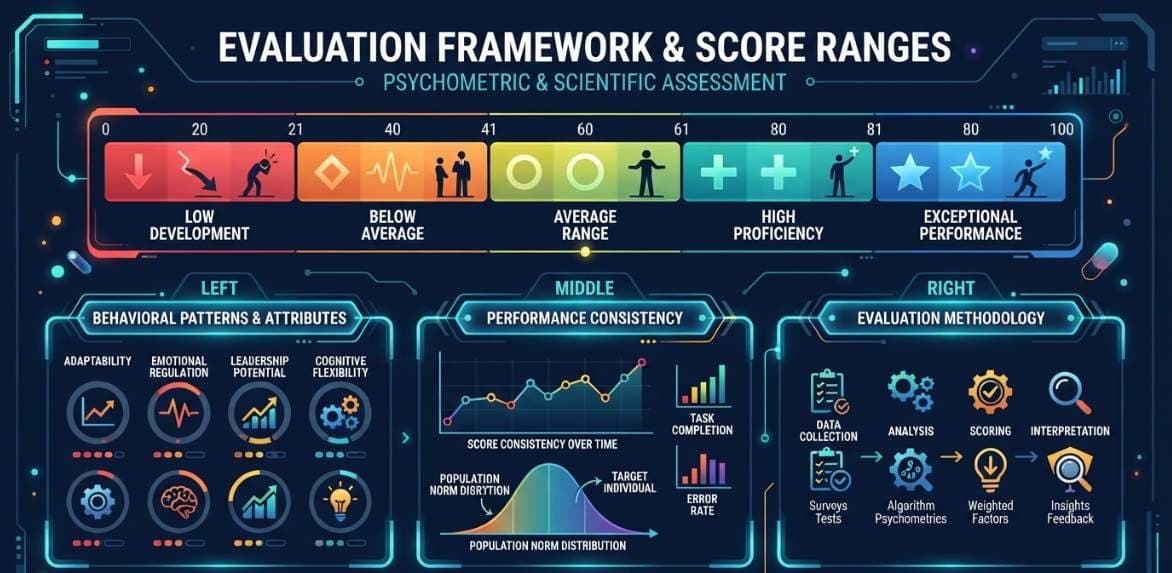
Self-reflection tools offer valuable clarity, but they also have distinct boundaries. High scores on a trait inventory do not automatically equate to a formal clinical diagnosis.
Human psychology is deeply complex, and many conditions share overlapping symptoms. For instance, social anxiety can cause avoidance of gatherings, while ADHD can lead to misreading social cues due to attention shifts. Because these traits can mirror each other, a high score on a social scale could stem from multiple intersecting factors rather than a single source. If you want to dive deeper into scoring nuances, reviewing a detailed raads-r score interpretation guide can help clarify these distinctions.
An online screening questionnaire serves as a mirror, not a medical exam. It helps you organize your thoughts, identify personal patterns, and prepare for meaningful discussions with healthcare professionals. To learn more about the broader framework, you can read our comprehensive raads-r scale overview to understand its design intent.
Learning about your cognitive patterns is an empowering milestone. Transforming that awareness into practical self-care requires patience and structured reflection.
When you begin noticing your unique social processing habits, you can take several gentle steps forward:

If you want to continue your self-reflection journey, you can try the questionnaire available on our platform. This tool is designed to help you organize your behavioral traits in a structured, judgment-free environment.
Completing our exploratory questionnaire generates an immediate, easy-to-read summary of your responses. It breaks down your tendencies across key behavioral domains, offering a clear mirror for your personal self-discovery journey. You can safely try the autism-raadsr self assessment to see how these patterns manifest for you.
Understanding social relatedness and adult trait patterns is a powerful step toward self-acceptance. By honoring your personal energy limits and recognizing your cognitive style, you build a healthier foundation for daily life. While self-reflection tools provide valuable personal clarity, always consider speaking with a qualified professional if you are seeking a formal clinical assessment or personalized medical guidance.