//

Finding your high masking autism raads-r score can feel incredibly frustrating for many adults. You might strongly suspect you have autistic traits, but years of subconscious camouflaging often make standard self-assessments confusing. Because you hide your struggles so seamlessly, worrying about getting inaccurate test results is completely normal. Therefore, you need a different approach to understand your mind. If you are looking for a helpful starting point, you can explore our AI RAADS-R test to organize your thoughts safely. This comprehensive guide unpacks exactly how masking behaviors skew your results, provides a framework to help you answer questions accurately, and clarifies confusing borderline scores so you can take your next steps with confidence.
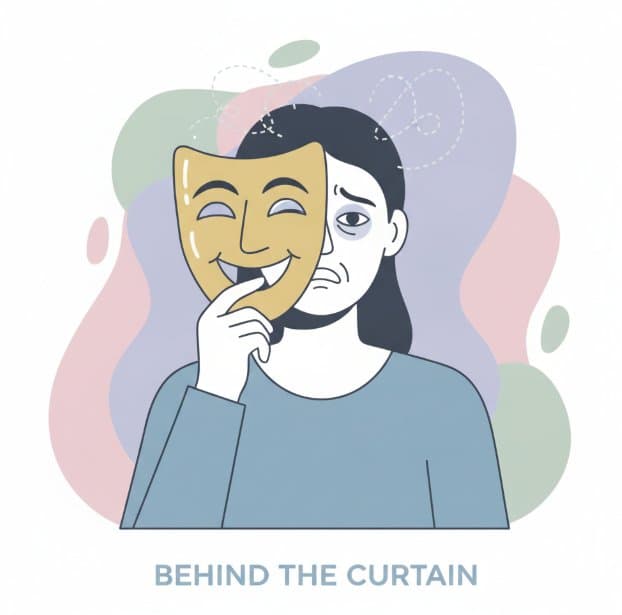
Understanding your high masking autism raads-r score begins with defining masking itself. When taking a self-assessment, your lifelong coping mechanisms often get in the way. Therefore, recognizing these hidden patterns is your first critical step.
High masking refers to the conscious or subconscious hiding of neurodivergent traits to blend into neurotypical environments. For instance, you might force eye contact during a meeting or suppress the urge to fidget. Consequently, people around you assume you are perfectly comfortable. However, your brain is working overtime. This constant, invisible performance makes standard autism masking traits difficult to spot in typical questionnaires.
Masking is not merely acting; it is an exhausting survival strategy. Before a social event, you might spend hours mentally scripting conversations. During the interaction, carefully mirroring the body language of others becomes your primary focus. As a result, you appear socially successful on the outside. Meanwhile, the internal energy drain is immense. This massive gap between external actions and internal exhaustion defines the masking experience.
When taking a questionnaire, maskers often self-report incorrectly. They instinctively write down their successful external behaviors rather than acknowledging their internal struggles. Here is a quick checklist to help you spot this habit:
If your internal reality matches the second list, your masking is highly active, which will inevitably impact your test results.
Evaluating a high masking autism raads-r score requires looking well beyond the surface. The entire RAADS-R scoring system relies on self-reporting. Simply put, if your coping skills trick you into lying to yourself, the test cannot help you.
Many masked individuals receive a surprisingly low score for autism traits. This discrepancy happens because they answer questions based on their "learned success." For example, a question might ask if you find it easy to chat with peers. Because you painstakingly learned how to fake small talk at age 25, you might instinctively answer "True." However, you completely ignore the sheer panic it caused you at age 12. As a result, the test registers a false negative.
Standard questionnaires ask about your actions, yet they rarely ask about the heavy cost of those actions. You might successfully attend a loud family party. However, you might also need three days of dark-room isolation to recover afterward. The raw data only sees the attendance, thus lowering your autistic trait score. Understanding RAADS-R results means you must actively account for this hidden burnout.
To get a more accurate reflection of your traits, you must change how you read the questions. The RAADS-R includes nuanced options like "True now and when I was young." This specific design is your master key to bypassing adult masking habits.
This remains the most common question maskers ask. The answer is definitive: always answer based on your internal feelings. Do not answer based on the coping skills you use to survive the workday. If maintaining eye contact feels like staring into the sun, you struggle with eye contact—even if nobody else notices your discomfort. Your internal reality is what the test is truly trying to measure.
To effectively bypass your adult masking, use this step-by-step framework when answering questions:
Once you finish the test, interpreting the numbers is the next hurdle. A high masking autism raads-r score can be difficult to interpret, but a high or low number alone cannot show whether masking affected your answers. Treat the result as a prompt for further reflection, not a verdict.
The original RAADS-R validation study proposed 65 as a threshold for further clinical consideration. It is not a diagnostic cutoff that can be applied confidently to every person or language version, and later clinical studies have found limited predictive value in some referred populations. No validated score range exists specifically for high-masking people, so do not assume masking always lowers the total.
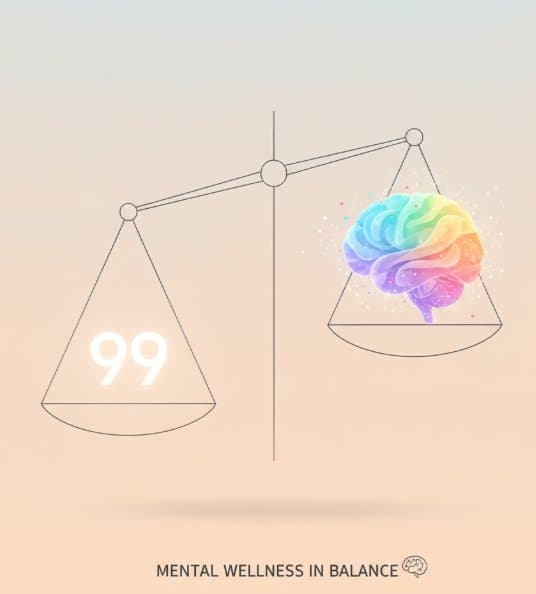
A score of 99 is above the threshold used in the original validation study, but it does not by itself establish autism, neurodivergence, or the effect of masking. Its meaning depends on developmental history, current functioning, overlapping conditions, the language and version of the questionnaire, and a broader professional assessment.
A self-assessment is an educational tool, not a final medical decree. Other complex factors in your life can heavily influence your score, and considering these variables helps maintain a safe, realistic perspective.
Cognitive compensation is incredibly common among high maskers. If you have a high IQ, you can logically deduce social rules, essentially treating human interaction like a complex math problem. Consequently, you learn the "correct" answers for socializing. This high intelligence effectively hides your intuitive social struggles, allowing you to pass standard screenings while still feeling entirely alienated from your peers.
Can you get a false positive? Absolutely. A high score does not guarantee you are autistic. Conditions like severe social anxiety, complex post-traumatic stress disorder (CPTSD), and ADHD share many behavioral traits with autism. For example, severe sensory overload can happen in both ADHD and autism. Therefore, you should never use a self-test as a definitive diagnosis; it is simply a supportive tool to help you reflect on your patterns.
Standard tests often leave maskers feeling confused and invalidated. If you want a deeper, more nuanced understanding of your traits, you should try the RAADS-R test online using an AI-enhanced platform. A single static number simply cannot capture the complexity of camouflaging.
It is perfectly normal to feel frustrated if your score is lower than expected. First, do not panic. Second, review your answers using the "Before Age 16" framework discussed earlier to ensure you aren't answering from your "masked" self. Finally, look for modern tools that explain the "why" behind your answers, rather than just handing you a flat, confusing number.
Maskers typically have highly uneven trait profiles. You might score incredibly low on social issues because of your scripting, but max out completely on sensory sensitivities. An AI-assisted self-reflection tool analyzes these distinct categories separately. It helps you see exactly where your emotional energy is leaking. Ultimately, this detailed behavioral breakdown is far more valuable than a generic total score.
When you use an AI-assisted questionnaire, the output is purposely designed for self-discovery. The personalized report will categorize your responses into clear behavioral patterns and highlight potential masking habits. Also, it provides gentle, educational context explaining why you might feel exhausted in specific everyday environments. This empowers you to organize your thoughts thoroughly before speaking with a medical professional.
Processing your high masking autism raads-r score is merely the first step on a lifelong journey of self-discovery. Masking certainly makes self-assessment difficult, but it does not make it impossible. By focusing purely on your internal feelings and childhood baselines, you can gain a much clearer picture of your brilliant, complex mind.
If you are ready to take the next insightful step, you can safely check your traits with this RAADS-R test to receive your personalized, AI-driven educational report today.
Please note: This online tool is designed strictly for educational and self-reflection purposes. It cannot replace a professional medical diagnosis. If your results strongly resonate with you and impact your daily life, we highly recommend sharing these insights with a licensed psychologist or psychiatrist for a formal clinical evaluation.
What does high masking mean in the context of autism? High masking is the conscious or subconscious hiding of neurodivergent traits. Individuals do this to blend into neurotypical society safely, which often leads to severe internal burnout, anxiety, and long-term exhaustion.
Can high masking cause a falsely low RAADS-R score? Masking may influence how someone interprets and answers self-report questions, but a low score cannot be attributed to masking from the number alone. Do not adjust answers simply to compensate; note concrete childhood and current examples and discuss uncertainty with a qualified clinician.
Can a high IQ mask autism traits during a self-assessment? Absolutely. High cognitive abilities allow individuals to logically deduce correct social responses rather than feeling them intuitively. This intellectual compensation masks their underlying social difficulties during standard self-tests.
Is it possible to score high on the RAADS test and not be autistic? Yes. Conditions like complex trauma (CPTSD), severe social anxiety, or ADHD share overlapping traits with autism. These conditions can easily elevate your scores, which is why a professional evaluation is always necessary for clarity.
Does a high RAADS-R score guarantee an autism diagnosis? No. Self-assessments are strictly educational tools designed to help you organize your thoughts and reflect on your behavioral patterns. A high score suggests you should consult a medical professional, but it never guarantees or replaces a formal clinical diagnosis.