//

Exploring autism raads-r as an adult often feels like finding the final piece of a lifelong puzzle. You start looking back at your childhood, your social habits, and your sensory preferences with a new lens. To get clarity, many people turn to online screening tools. The two most prominent names you will encounter are the RAADS-R vs. Aspie Quiz. Both offer a window into your cognitive patterns, yet they speak very different languages. One is rooted in clinical research, while the other is born from the autistic community itself. Before you dive in, it is helpful to explore the RAADS-R test online to see how these frameworks can guide your self-discovery journey.
Disclaimer: The following information and linked tools are intended for educational and self-reflection purposes only. They do not constitute a clinical diagnosis or professional medical advice.
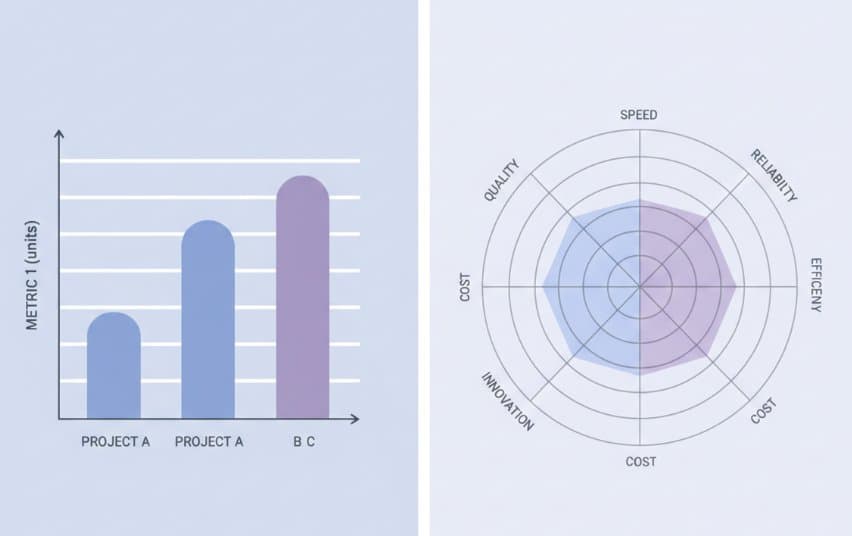
For many adults, the realization that they might be on the autism spectrum comes after years of feeling "different" without a clear reason. You may have excelled in certain areas while struggling with social nuances that seemed to come naturally to others. This is why RAADS-R vs. Aspie Quiz comparisons are so vital. They provide a structured way to validate your lived experience when professional diagnosis feels out of reach or intimidating.
Self-screening is not just about getting a score. It is about identifying specific traits that explain your world. Late-diagnosed adults often find that these tests help them revisit childhood memories with more self-compassion and understand why certain sensory environments are overwhelming.
When we look at the RAADS-R vs. Aspie Quiz, the most significant difference lies in their origins. The RAADS-R (Ritvo Autism Asperger Diagnostic Scale-Revised) was designed by clinicians to identify autism in adults who were missed by traditional childhood screenings. In contrast, the Aspie Quiz is a community-driven tool that focuses on "neurotypical" vs. "neurodiverse" traits.
Accuracy is a complex topic when discussing RAADS-R vs. Aspie Quiz. If you are looking for scientific reliability, the RAADS-R usually takes the lead due to its clinical sensitivity. However, it is essential to read the RAADS-R test results explanation to see what the numbers really signify in a clinical context.

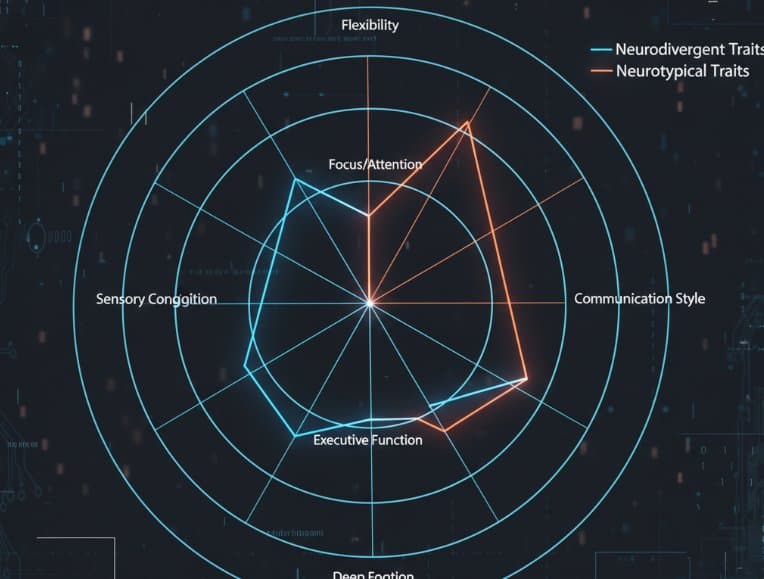
Understanding your scores is often the most confusing part. The RAADS-R gives you a numerical total, where a score above 65 suggests significant autistic traits. The Aspie Quiz provides a visual "spider chart" that shows where your traits fall relative to neurotypical averages.
It is quite common to get "conflicting" results. You might score high on the RAADS-R but look more balanced on the Aspie Quiz. This happens because the RAADS-R looks for clinical "impairments," while the Aspie Quiz looks for "differences." Neither is "wrong"; they simply provide different perspectives on your neurodivergent profile.
Neither test is objectively "better," but one might be better for your specific needs.
Traditional versions of these tests are static. However, modern technology is changing how we understand neurodiversity. In our AI-enhanced RAADS-R report, we have taken the foundational principles of the RAADS-R and enhanced them with artificial intelligence. Our AI-enhanced report does not just calculate a number; it looks for patterns in your responses that a simple addition-based score might miss.

Whether you choose the RAADS-R or Aspie Quiz, remember that these are tools for self-exploration. Your next steps might include journaling your feelings, connecting with a community, or eventually finding a neurodiversity-affirming therapist. If you're ready to start, you can check your traits with the RAADS-R test to gain deeper insights into your cognitive profile.
No, online tests like the RAADS-R and Aspie Quiz are screening tools designed for self-reflection. An official diagnosis can only be provided by a licensed healthcare professional.
Generally, a score of 65 or higher indicates significant autistic traits. Most neurotypical individuals score well below this threshold.
Autism often presents differently in women due to masking. Many find that the RAADS-R's focus on childhood behaviors is particularly helpful for recalling traits they have learned to hide.