//

If you recently completed the autism raads-r self-assessment and found yourself staring at a RAADS-R score 130 meaning, you are likely feeling a mix of curiosity, relief, and perhaps a bit of uncertainty. Seeing a triple-digit number can feel overwhelming, especially when you are searching for answers about your identity and how your brain processes the world. This score is a significant data point in your journey of self-discovery, serving as a powerful indicator that your experiences align closely with the autistic community.
In this guide, we will break down exactly what a 130 signifies on the Ritvo Autism Asperger Diagnostic Scale-Revised. You will learn how this score compares to the clinical threshold, what the individual subscales tell you about your specific traits, and the practical steps you can take next. Whether you want to check your traits for the first time on autism-raadsr.com or interpret a result you already have, this article provides the clarity you need to move forward with confidence and self-compassion.

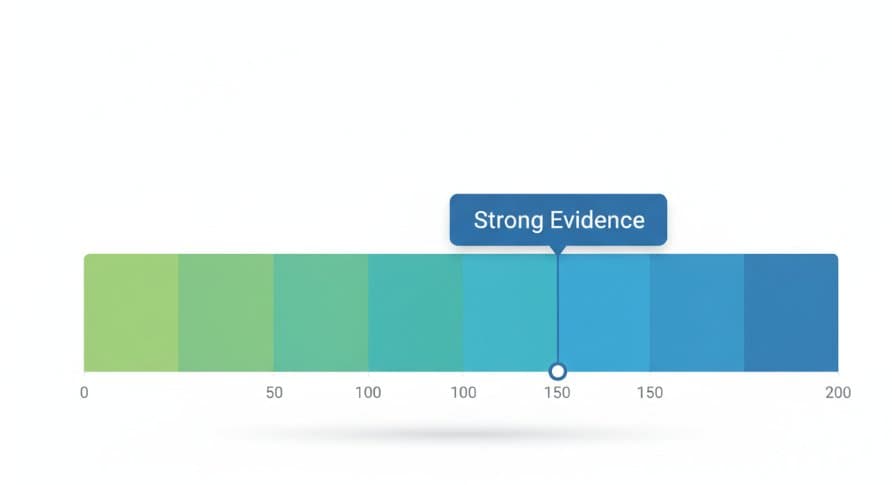
To understand the RAADS-R score 130 meaning, we must first look at the design of the test itself. The RAADS-R is a clinical screening tool specifically developed to identify autism in adults who may have "masked" their traits or were overlooked in childhood. A total score of 130 is significantly above the primary clinical threshold of 65. In the world of autism screening, this score is generally categorized as "strong evidence of autistic traits."
While a score of 65 suggests you meet the minimum criteria for being on the spectrum, a score of 130 indicates that your neurodivergent traits are quite pronounced across multiple areas of your life. Most neurotypical individuals—those without autism—tend to score very low, often well below 30. Therefore, hitting 130 suggests that your social interactions, sensory experiences, and cognitive patterns are notably different from the majority of the population.
However, it is vital to remember that a RAADS-R score 130 meaning does not equal an official medical diagnosis. Instead, think of it as a highly accurate "smoke detector." It tells you there is a very strong likelihood of autism, but it cannot replace a formal evaluation by a neuro-affirming professional. It validates that your "gut feeling" about being different has a measurable basis in your behavioral patterns.
When looking at a RAADS-R test score chart, the 0 to 240 scale provides a wide range of possibilities. On this spectrum, 130 sits firmly in the middle-to-high range. It is not the "highest" possible score, but it is much higher than the average score for neurotypical people. In fact, many studies suggest that the average score for diagnosed autistic adults falls between 130 and 150.
To give you a better visual of your position, consider these common scoring tiers:
As you can see, a RAADS-R score 130 meaning places you in the tier where most clinicians would strongly suspect autism. It suggests that your life experiences aren't just "slightly" different; they are consistently shaped by neurodivergent processing. This level of score usually means you have been navigating a world not built for your brain for a long time.
Interestingly, many people wonder if 130 is "too high" or "too low." In reality, it is a very typical score for late-diagnosed adults. Because the RAADS-R accounts for "masking"—the process of hiding traits to fit in—a score of 130 often reflects the internal struggle that others might not see. You might appear to function well in social settings, but your internal experience (the effort required to socialise or the intensity of sensory input) is what drives that 130 score. It is a validation of your internal reality rather than your external performance.
The total RAADS-R score 130 meaning is actually the sum of four distinct categories. Understanding these subscales is the key to knowing how your autism manifests. Two people can both score 130, yet their daily struggles might look completely different. One might struggle intensely with loud noises, while another might find social cues completely indecipherable.
For most adults scoring 130, the RAADS-R social relatedness score is the largest contributor. This section looks at how you connect with others, whether you struggle with small talk, or if you find "unwritten social rules" confusing. If this subscore is high, it explains why you might feel exhausted after a party or why you often feel like everyone else received a "social manual" that you missed.
The other subscales include Language, Sensory-Motor, and Circumscribed Interests.
By reviewing a comprehensive guide on autism-raadsr.com, you can see how these individual pieces fit together. If your 130 is mostly driven by Sensory-Motor scores, your autism might feel like a constant battle with an overstimulating environment. If it is driven by Social Relatedness, it might feel more like a communication barrier.
A total score is a great starting point, but it is only half the story. The RAADS-R score 130 meaning tells you that you have autistic traits, but it doesn't always tell you why or how they affect your specific life path. This is where deeper reflection becomes essential. Many adults find that once they see this number, they begin to re-evaluate their entire childhood and career through a new lens.
A score of 130 can sometimes mask the nuance of your experience. For example, you might have high social traits but very low sensory traits. Or perhaps you have developed such strong coping mechanisms that some questions were hard to answer honestly. This is why looking at the patterns—not just the final number—is so important for your mental health and self-acceptance.
At this stage, you might be looking for more than just a number. Our AI-driven assessment goes beyond the basic 130 total. It analyzes the relationship between your answers to provide a personalized report on your behavioral patterns. Instead of just knowing your RAADS-R score 130 meaning, you can discover which specific environments trigger your traits and how to leverage your unique neurodivergent strengths.
This educational tool is designed for self-reflection. It helps you organize your thoughts so that if you choose to see a doctor, you have a clear, data-backed narrative of your experience. Understanding your brain shouldn't be a mystery; it should be an empowering journey toward living a more authentic life.

Receiving a high score is often a "lightbulb moment." However, it also leaves you wondering, "What do I do now?" If you are processing a RAADS-R score 130 meaning, the next steps are about building a support system and gathering more information for a possible formal evaluation.
If you decide to seek an official diagnosis, your RAADS-R result is a valuable piece of evidence. Use this checklist to prepare for your appointment:
You don't have to navigate this alone. Many people with a RAADS-R score 130 meaning find immense comfort in neurodivergent communities. Whether it's through online forums, social media, or local support groups, talking to others who "get it" can reduce the shame often associated with being different. Hearing others talk about their stims, their special interests, and their social burnout can help you realize that you aren't "broken"—you are simply neurodivergent.
Ultimately, your RAADS-R score 130 meaning is a tool for empowerment. It is a signpost pointing toward a deeper understanding of who you are. Whether you choose to pursue a formal diagnosis or use this information for self-identification, the goal is the same: to live a life that respects your sensory needs, honors your communication style, and celebrates your unique perspective.
As you continue to explore, remember to be kind to yourself. You have likely spent years trying to fit into a neurotypical mold. Now, equipped with the knowledge that a score of 130 brings, you can begin to peel back the mask. You can learn more about your patterns and find the strategies that actually work for your brain. If you're ready to dive deeper, you can try the test online at autism-raadsr.com today to see how your traits have evolved or to get a more detailed analysis.
No, a score of 130 does not confirm a medical diagnosis. The RAADS-R is a screening tool designed to identify the presence of traits. While 130 is a high score and strongly indicates autism, a formal diagnosis can only be made by a qualified psychologist or psychiatrist who conducts a comprehensive clinical interview.
There is significant overlap between autism, ADHD, and social anxiety. Some people with ADHD score high on the RAADS-R because of sensory issues or hyperfocus. However, a score as high as 130 is usually more characteristic of autism. If you have co-occurring conditions, a professional can help you disentangle which traits belong to which condition.
The RAADS-R social relatedness score is often the highest for adults because social interaction is where neurodivergent differences are most frequently felt. In a world built for neurotypical communication, autistic adults often have to work twice as hard to interpret cues, leading to a higher score in this specific category.
The RAADS-R specifically asks about traits "now and when you were young." If you find your current score is higher, it might be because the demands of adult life (work, bills, complex relationships) have exceeded your ability to mask. This is a common experience for many late-identified autistic individuals.
There are no "bad" scores on the RAADS-R. A score of 130 is simply a reflection of how your brain works. Many people feel a sense of relief getting a high score because it provides an explanation for challenges they have faced their entire lives. It is a step toward self-acceptance and finding the right support.