//

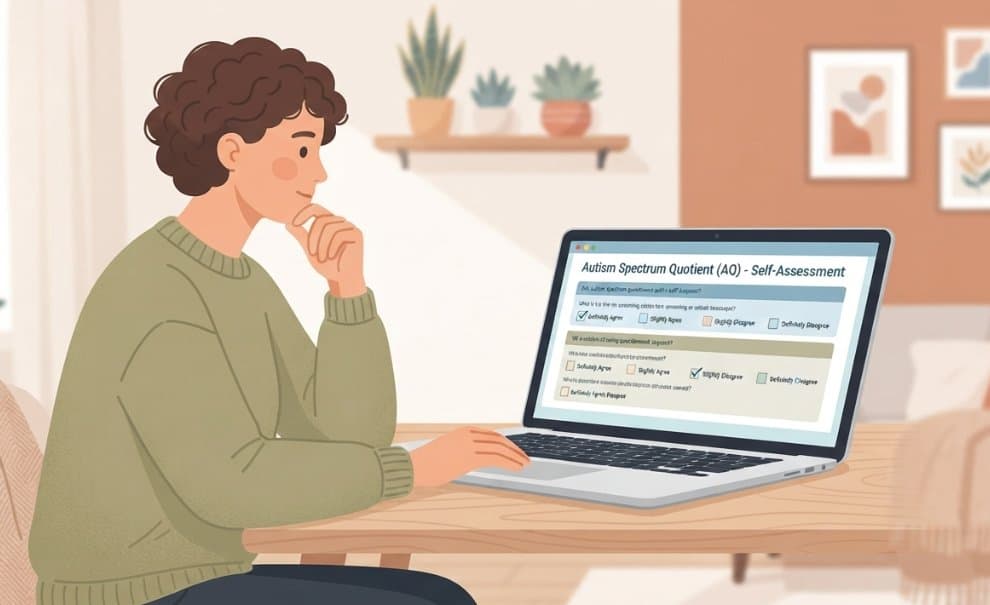
Have you ever felt like you were playing a role in your own life — watching others for cues, rehearsing conversations in your head, and leaving social events completely drained? For many women, this exhaustion is their normal. Yet for years, the underlying reason stays invisible — even to professionals. For many, the journey to clarity begins with an autism raads-r screening, a tool designed to identify traits that often go unnoticed in traditional clinical settings.
The female autism phenotype describes a distinct pattern of how autism spectrum disorder (ASD) presents in women and girls. It often differs significantly from the "classic" autistic profile that shaped decades of research and diagnostic tools. If you've wondered why autism so frequently goes unrecognized in women, this guide explains the key traits, the role of masking and camouflage, and how to begin exploring your own patterns through a self-reflection tool at autism-raadsr.com.
The term phenotype refers to the observable characteristics of an organism — in this case, the outward signs and behaviors through which autism expresses itself. The female autism phenotype is the cluster of traits, behaviors, and patterns that tend to appear in autistic women and girls, and it often looks quite different from the presentations that originally defined autism research.
Early autism research was conducted almost entirely on male participants. This created a diagnostic template centered on male-typical presentations: obvious social withdrawal, highly visible repetitive behaviors, and narrow, intense interests in stereotypically "unusual" topics. Women, on average, present with subtler versions of these traits — or have learned to conceal them so effectively that they don't register on traditional screening tools.
In the classic profile, social difficulties are usually more apparent. In the female phenotype, many women develop elaborate coping strategies — studying social norms, mimicking peers, and performing neurotypicality — so convincingly that neither teachers, doctors, nor family members notice anything unusual. The result is a population of autistic women living under the surface of diagnosis for years, sometimes decades.
The female autism phenotype isn't a checklist built for quick identification. Instead, it's a pattern — a way of moving through the world that feels effortful in ways others don't seem to notice.
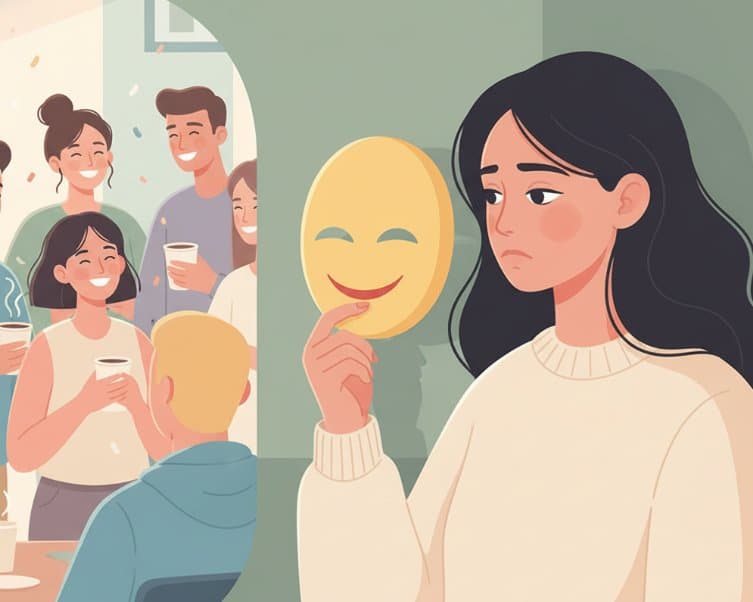
Autistic women often develop finely tuned social scripts. They watch, observe, and adapt — mirroring others' body language, tone of voice, and conversation style. Friendships may feel maintained rather than naturally felt. After social interactions, even enjoyable ones, a deep sense of exhaustion often follows. This isn't introversion — it's the cost of performing connection.
The female autism phenotype frequently includes heightened emotional sensitivity. Small environmental details — certain fabrics, background sounds, or fluorescent lighting — can feel overwhelming. Emotions themselves may feel intense and difficult to regulate. Many autistic women describe feeling "too much" while simultaneously struggling to explain what they feel to others.
When completing an autism raads-r test, many women find that their scores reflect a lifetime of social adaptation. A total score of 65 or higher typically indicates that an individual is in the autistic range, but for women who mask heavily, subscale scores are often more revealing. The Social Relatedness subscale, for instance, frequently highlights the effort required to maintain "typical" interactions, while the Sensory-Motor subscale can validate years of feeling "over-sensitive" to environments that others seem to ignore.
Understanding these results isn't just about a number; it's about validating a lived experience. Many women discover that their high scores in specific domains explain why they feel "different" even when they appear to be functioning "normally" to the outside world.
Compared to other screeners like the AQ-50, many clinicians prefer the autism raads-r for adult women because it probes deeper into developmental history and subtle pragmatic language differences. While the AQ-50 provides a quick snapshot of current traits, the 80 items in this assessment are designed to detect "camouflaging" behaviors that women often employ to survive in neurotypical spaces.
This makes it a more robust starting point for those who suspect their autism has been hidden behind a "social mask" for decades. By looking at traits across the lifespan rather than just current behavior, it offers a more comprehensive picture for those seeking self-understanding or preparing for a professional evaluation.
Autism masking (also called camouflage) is the process of suppressing or hiding autistic traits to fit in with neurotypical expectations. Research suggests women and girls are significantly more likely to mask than their male peers — and to do it more effectively.
Masking can look like:
Long-term masking takes a significant toll. Research links chronic camouflage to burnout, anxiety, depression, and a fragmented sense of identity. Many women who mask heavily report not knowing who they "really are" outside the performance. Some describe a late autism diagnosis as the first time their inner experience finally had a name — and that name wasn't a flaw.
The average age of autism diagnosis is significantly higher for women than men. Many autistic women receive their diagnosis in their 30s, 40s, or even later. Some only recognize their autism after a child or younger relative is diagnosed first.
The DSM and earlier diagnostic frameworks were built on research samples dominated by male participants. Behaviors more common in male presentations — visible stimming, overt social disengagement, "unusual" hobbies — became the default template. Female-typical presentations, including masking and adaptive social behavior, simply didn't match.
Before receiving an autism diagnosis, many autistic women are told they have:
These conditions aren't invented. Many autistic women do experience anxiety or depression — often as a consequence of years of masking. However, treating only the secondary condition while missing the underlying autism means the root cause goes unaddressed.
Studies consistently find that autism is diagnosed roughly four times more often in males than females. One explanation is the female protective effect — a hypothesis suggesting that females require a higher "load" of genetic or neurological factors before autism traits become apparent enough for diagnosis.
In other words, it's not that autism is rare in women. It may be that the female brain offers some biological resilience that moderates symptom expression — and that, combined with masking, creates a double invisibility. The science here is still developing, but most researchers now agree the gender gap in autism diagnosis reflects missed cases rather than true prevalence differences.
One of the most persistent misconceptions about autism is that autistic people lack empathy. This is particularly harmful when applied to autistic women, for whom relationship and emotional attunement are often central.
Many autistic women actually experience hyper-empathy — feeling others' emotions so intensely that it becomes overwhelming. They may struggle not with feeling empathy, but with expressing it in the way neurotypical people expect. The challenge is often communicative rather than emotional.
Depression is significantly more common in autistic women than in the general population. However, the relationship isn't simple. Depression in autistic women often develops as a consequence of:
Understanding the female autism phenotype is one thing. Making sense of your own experience is another. If you've recognized yourself in what you've read, the most meaningful next step is often self-reflection — not diagnosis.
Formal autism evaluation is a clinical process. It takes time, costs money, and isn't always accessible. But self-reflection — organizing your thoughts, identifying patterns, understanding where traits might show up in your life — is available to you immediately.
For those ready to explore further, the exploratory tool at autism-raadsr.com provides a personalized breakdown of trait patterns. Based on the validated RAADS-R scale, this AI-powered assessment takes roughly 15–20 minutes and covers 80 items across your lifespan. It is designed for self-reflection and awareness, helping you organize your thoughts before potentially speaking with a professional.
The female autism phenotype refers to the way autism tends to present in women and girls — often with stronger social skills on the surface, more subtle sensory differences, and a heavy reliance on social camouflage. It frequently goes unrecognized because it doesn't match the male-typical autistic profile historically used in diagnosis.
Research suggests women and girls are more likely to mask autistic traits — consciously or unconsciously — by mimicking social norms, suppressing stimming, and adapting their behavior to appear neurotypical. This masking tends to be more effective in women, which is one key reason autism is underdiagnosed in female populations.
The autism raads-r is a screening tool designed to help adults identify traits associated with Level 1 autism. It is particularly useful for women because it asks about developmental history and internal experiences that may be hidden by masking, making it a valuable first step toward self-understanding.
Before receiving an autism diagnosis, autistic women are frequently diagnosed with anxiety disorders, depression, borderline personality disorder, or eating disorders. These conditions may genuinely coexist with autism, but they often reflect secondary effects of masking rather than the underlying cause.
Not necessarily. The female protective effect describes a biological hypothesis suggesting women may need a higher threshold of neurological factors before autism becomes diagnostically apparent. Most researchers now believe autism is underdiagnosed in women rather than genuinely less common.
Yes — and many autistic women experience what researchers call hyper-empathy, feeling others' emotions very intensely. The common stereotype that autistic people lack empathy is not supported by evidence, especially in female presentations where emotional sensitivity is often heightened rather than diminished.