Social Relatedness in RAADS-R: Understanding Adult Autism Traits
Navigating the Complexities of Adult Social Patterns
Elena
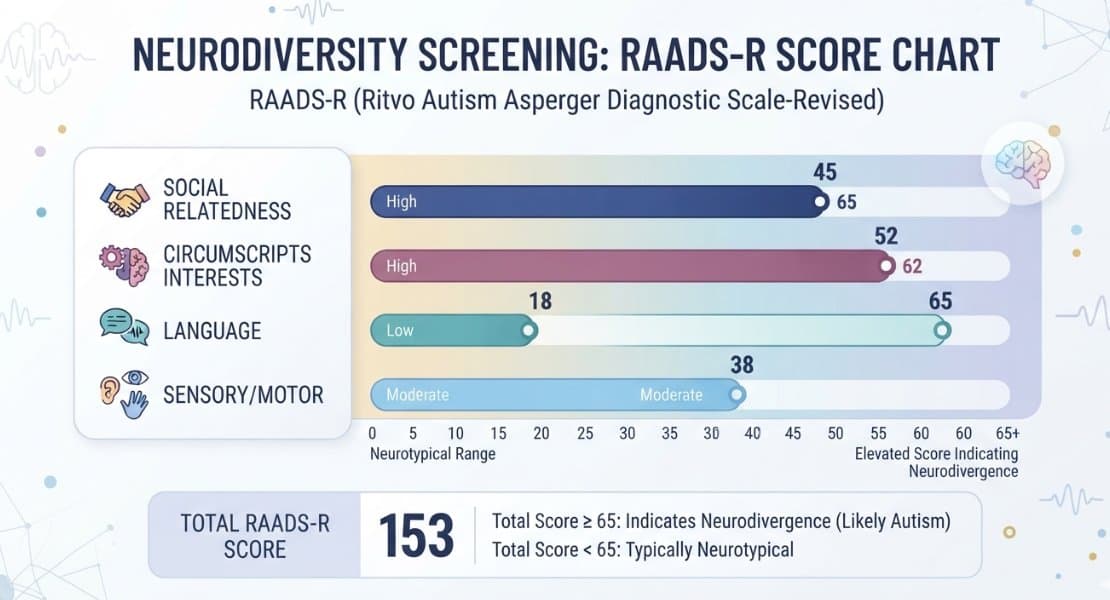
This blog explains adult autism screening, RAADS-R scores, sensory differences, masking, and next steps after a questionnaire. Use these guides to understand terms and prepare questions for a qualified professional. Online screening supports self-reflection, but neither a score nor an article can confirm or rule out an autism diagnosis.

Start with the question you want to understand, then read the relevant guide alongside its sources. A screening score describes responses to a particular questionnaire; it is not a complete explanation of your experiences. Keep concrete examples of daily challenges to discuss with a qualified professional.
Choose an article about screening, scores, sensory experiences, or masking. Check which questionnaire and population it discusses before applying its explanation to your own situation.
Compare the explanation with your experiences over time, including childhood where possible. A high or low score alone cannot establish a diagnosis or explain every difficulty.
Write down situations that affect work, relationships, or daily routines. If you want an assessment, bring these observations and any screening results to a qualified professional.
Screening can help organize observations and identify questions for an assessment. Diagnosis requires evaluation of behavior and development by qualified professionals. The National Institute of Mental Health explains that adult evaluation may consider communication, sensory experiences, repetitive behaviors, interests, and early developmental history.
“Health care providers diagnose ASD by evaluating a person’s behavior and development.”
Elena maintains this collection. Article cards show the author and publication date when available. These guides provide educational explanations of screening and research, not personal medical advice. Check the sources and dates of individual articles. You can learn about the project or contact us with a correction below.
No. Articles explain concepts and questionnaires help you reflect on your experiences. Neither replaces an assessment by a qualified professional, who considers developmental history and how traits affect daily life.
Read the guidance for the specific questionnaire, including its purpose and limitations. Scores from different tools are not interchangeable. Record examples that fit or do not fit your experience rather than treating a number as a diagnosis.
Use it to write down questions, communication preferences, and situations that cause difficulty. You can explore supportive everyday adjustments or discuss an assessment with a qualified professional. You do not need a blog article to validate your experiences.